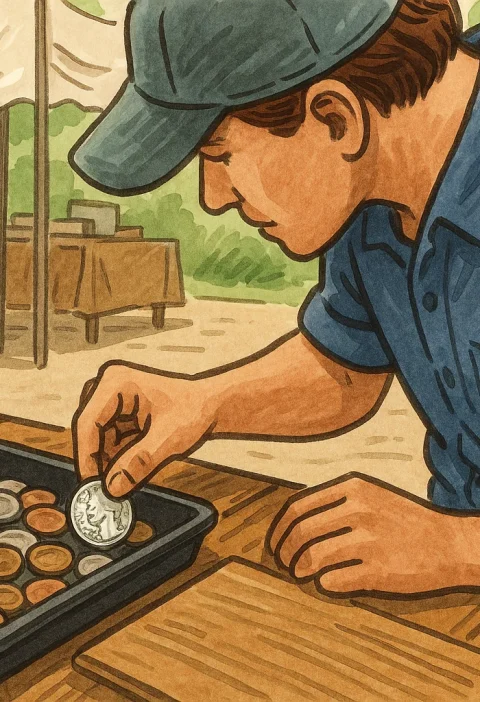
Before you begin purchasing coins from any new series or category you are starting to collect, you must first buy and carefully study specialized reference books related to those specific coins.
You shouldn’t use your money buying real collectible items until you have already invested your money into getting the necessary knowledge about those same items, this knowledge protecting you from mistakes.
The main goal of this principle is stopping financial losses, those losses happening because you don’t know the key facts about the coins you want.
Not knowing these facts often leads to buying coins that are too expensive, coins having damage, fake coins, or coins simply being less rare but having a high coin value.
Types of Necessary Books
A collector needs several types of books, the choice of book depending on the specific area of coin collecting chosen by the collector.
Price and Value Catalogs
For United States coins, the most famous book is “The Red Book”.
These books contain a long list of all coins ever made, listing them by year, by face value, and by the mint where they were made. The most important thing these books provide is the current retail price for coins in many different states of preservation.
The collector uses this catalog, finding the fair price that he or she should pay for a coin from a specific year and having a specific quality.
This process helps the collector stop paying too much money for coins.
Specific Catalogs
These are books focusing only on one specific type of coin, for example, only Lincoln Cents or only Washington Quarters — using them with a coin scanner app gives a complete guide to all US coins
They focus strongly on “varieties” and “errors”, these small differences being very important to specialized collectors.
These differences can include coins showing a doubled image, coins having a shifted striking, or coins showing letters that are wrong or changed.
History Reference Books
Such books describe the history of how the coins were made, the political decisions affecting the design, and the life stories of the people who designed the coins.
Understanding the context helps the collector appreciate the coin much more deeply, this understanding leading to better decisions about which coin series are the best to collect.
Financial Benefit: How Knowledge Saves Your Money
Reading and studying reference books before buying a coin gives a direct financial benefit to the collector, protecting their money.
Avoiding Fake Coins
A catalog, a coin value checker, and a specialized guide often provide important information about the features of a real coin, teaching the collector how to see the difference between a real coin and a fake coin.
This information includes the correct weight, the correct size, the correct thickness, and specific features of the coin’s edge, helping the collector feel more secure.
Result: Buying a fake coin means losing all your money, the fake coin having no real value to collectors.
Having knowledge helps protect your money from this loss.
Correctly Knowing the Coin’s Quality
The price of a coin mostly depends on its condition or grade, this condition determining the value.
The difference between a coin in “Very Fine” condition and a coin in “Uncirculated” condition can be thousands of dollars, making correct grading crucial.
The books show detailed photos and descriptions, clearly explaining the specific details you must look at or correctly deciding the coin’s condition.
Finding Key Dates and Errors
In every coin series, there are a few very rare coins called “Key Dates”, these coins having a very small number made, making them extremely expensive.
Collecting without a book means the collector might miss finding a rare and expensive coin, perhaps selling it for the low price of a normal coin.
More often, the collector might mistake a normal coin having a small scratch for a valuable “mint error,” leading to paying too much money for a coin that isn’t special.
Result: The knowledgeable collector can buy a truly expensive coin for a low price from a seller, that seller not knowing the coin’s true value, this leading to a big gain.
More importantly, the collector can stop buying a normal coin, this normal coin being sold at a very high price by someone wrongly calling it a “rare variety”, protecting the collector from a costly mistake.
Practical Collecting Programs and Reference Books
This important rule applies to all the major United States coin programs, including the bullion coins.
The 50 States and “America the Beautiful” Programs
For these programs, the errors aren’t the only important thing; also important are the coins made in a special quality and coins showing rare mint marks, these coins being made in very small quantities.
The book helps the collector find these rare coins, these rare coins often looking like the normal coins at first glance.
Investment Coins
Even though people buy these coins mostly for the value of the metal inside, there are some very rare years of issue, especially for the “Proof” versions, these versions having a very large numismatic price higher than the metal value.
The book helps the collector see the difference between a normal investment coin and a very valuable collector item.
The Steps for a New Collector
- Decide exactly what the collector wants to start collecting
- Buy the most current and specific reference book or catalog for the coin series chosen in the first step
- Read the book, focusing much attention on the sections explaining the grading system and the sections explaining the key dates and varieties
- Study the market prices shown in the catalog, looking at the different prices for the different conditions of the coin
- Only after finishing all the steps, having clear knowledge about how the coin should look, how much it should weigh, and how much it should cost in that specific condition, is it safe to begin making coin purchases